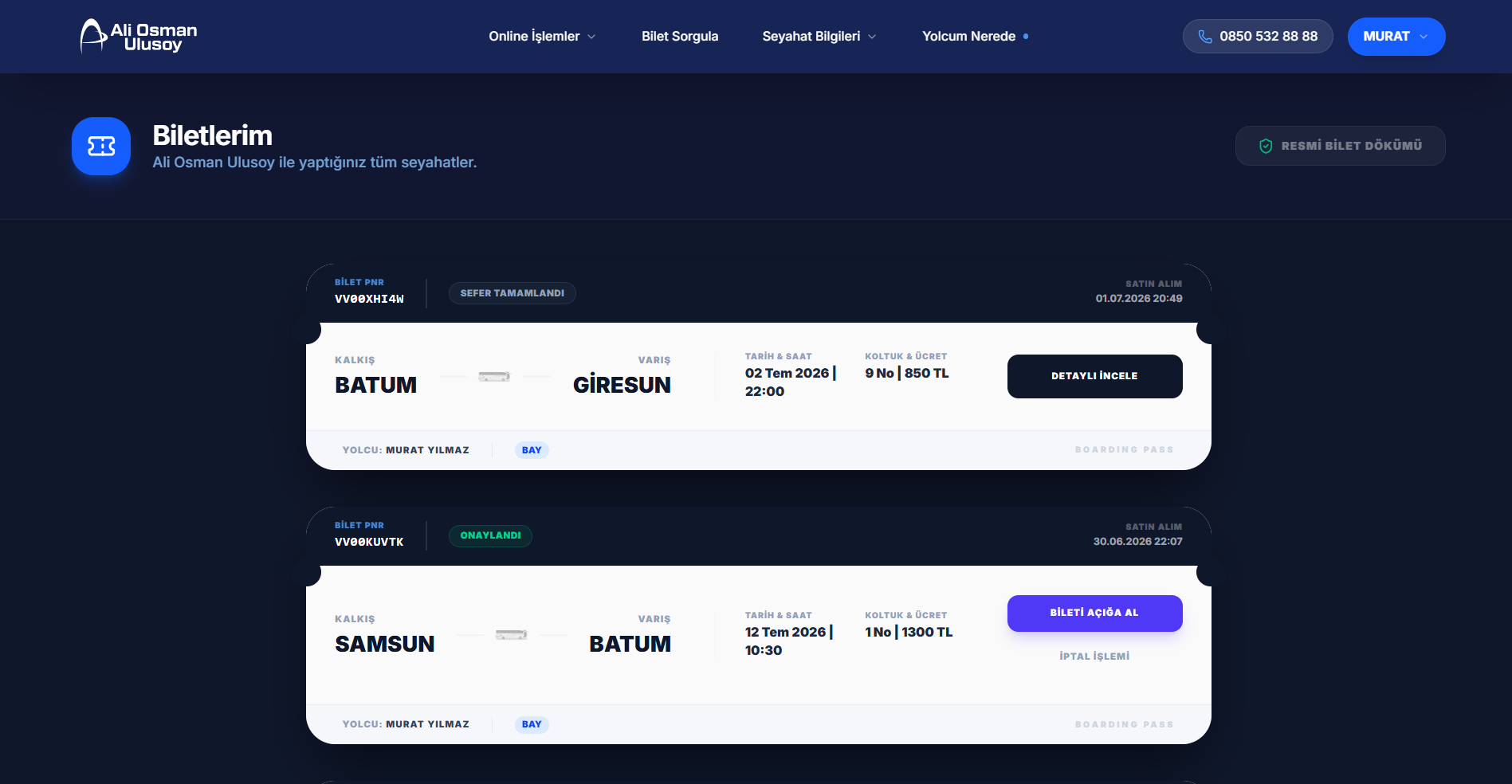
Case Study: Ali Osman Ulusoy Turizm – Digital Transformation & Operational Modernization
Project Summary: An end-to-end full-stack web automation developed to modernize the user experience (B2C) of a well-established intercity bus company and to make its background operational processes (B2B) manageable from a single centralized center.
1. Project Objective and Tech Stack
The system consists of 3 main layers: user interface, management panel, and service layer (ulusoy-front, ulusoy-admin, ulusoy-back). It was designed with modern web standards and scalability in mind.
- Frontend (User Interface - B2C): Next.js v16 (App Router), TypeScript, Tailwind CSS v4, Radix UI, React Hook Form + Zod, Zustand.
- Admin Panel (Operational Interface - B2B): Next.js v15 (App Router), Material UI (MUI v7) + Tailwind CSS integration, Tiptap, React Leaflet.
- Backend (API & Database): NestJS v10 (Modular architecture), Prisma ORM.
2. Architecture and Performance Decisions
A hybrid rendering architecture was implemented to ensure the system operates performantly during high-traffic periods (holidays, vacations, etc.) and remains visible for SEO.
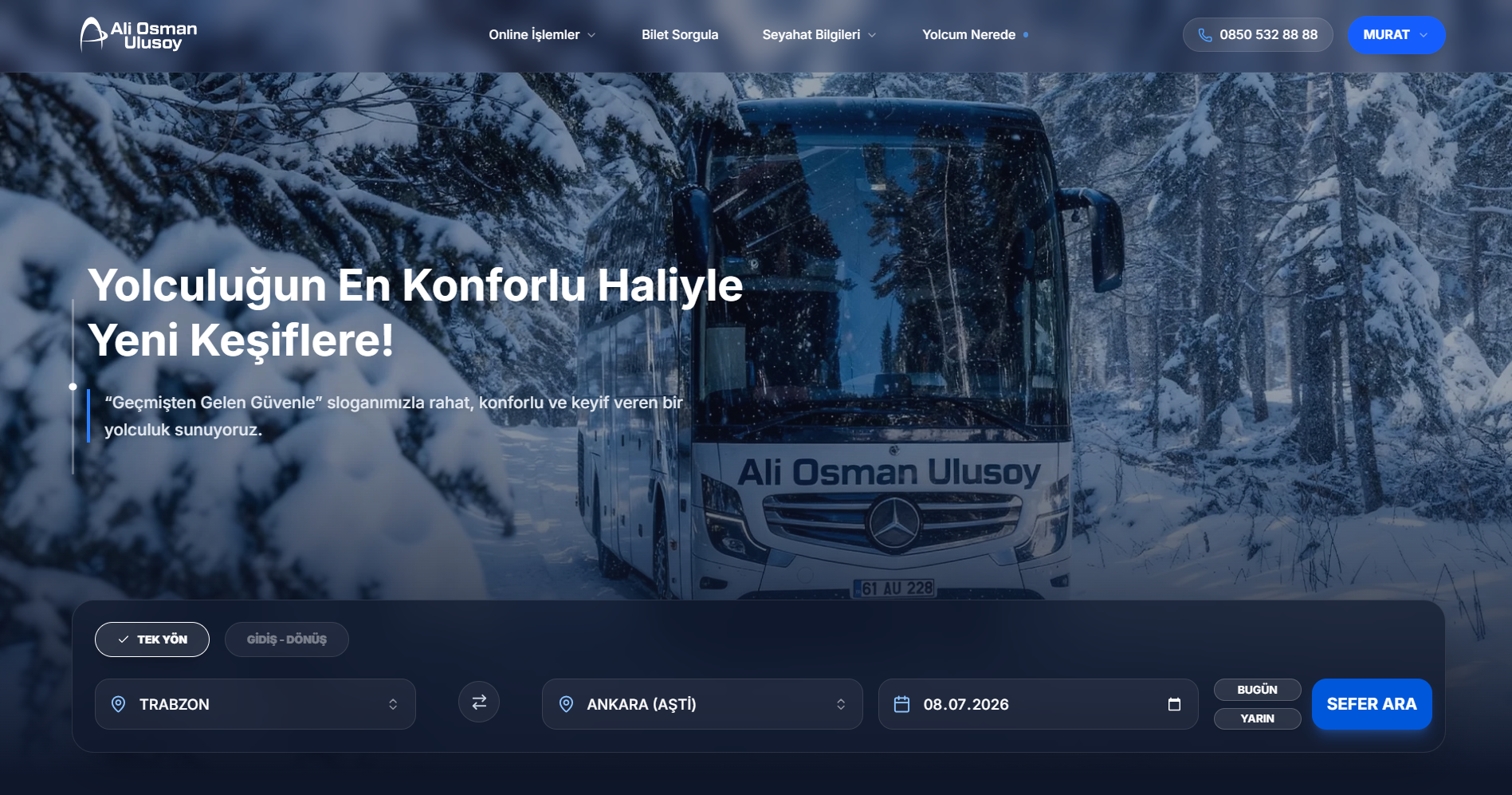
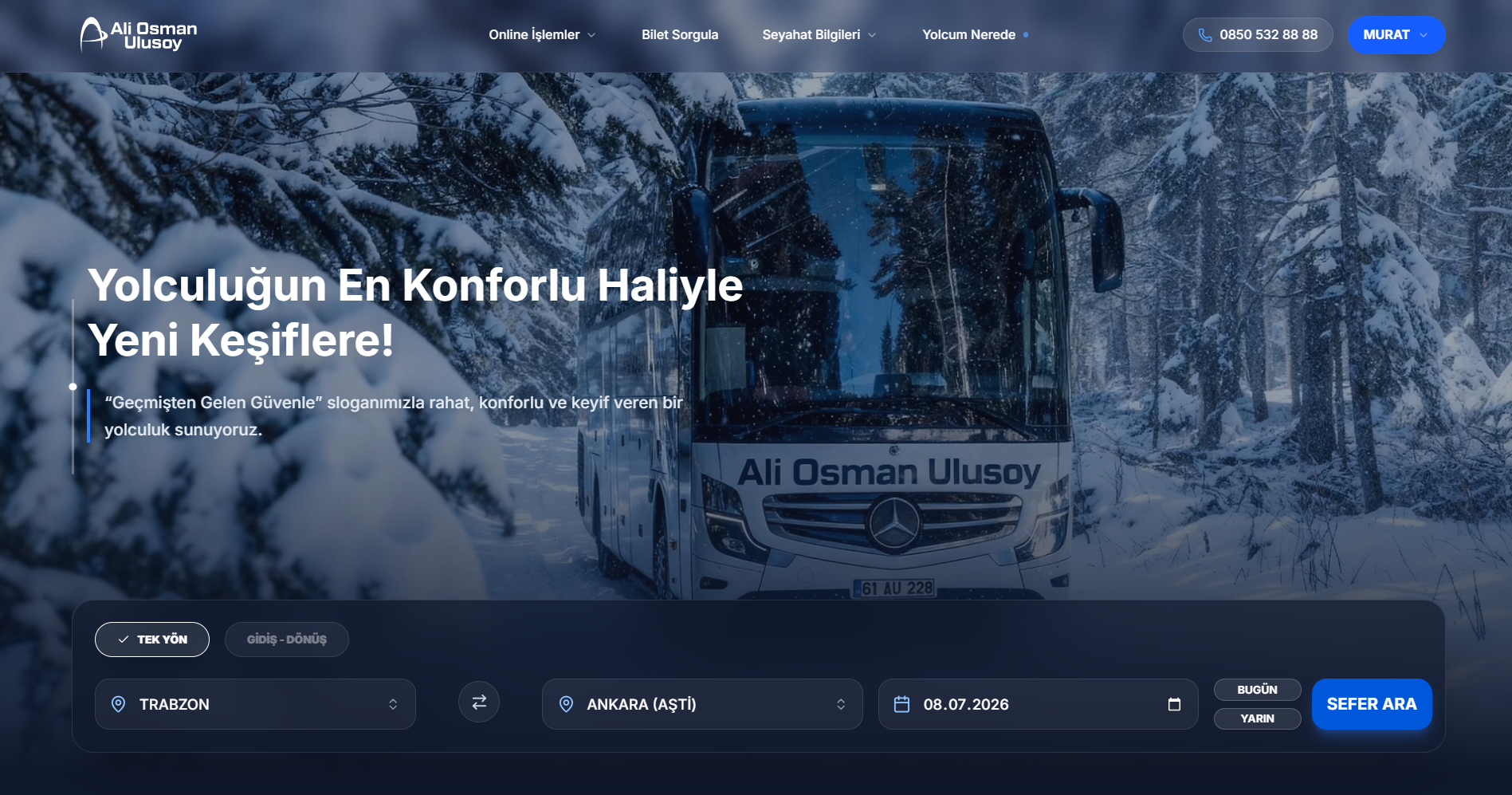
- SSR & SEO Optimization: Pages critical for search engines, such as the homepage and corporate pages, are served with Server-Side Rendering (SSR) to optimize layout transitions.
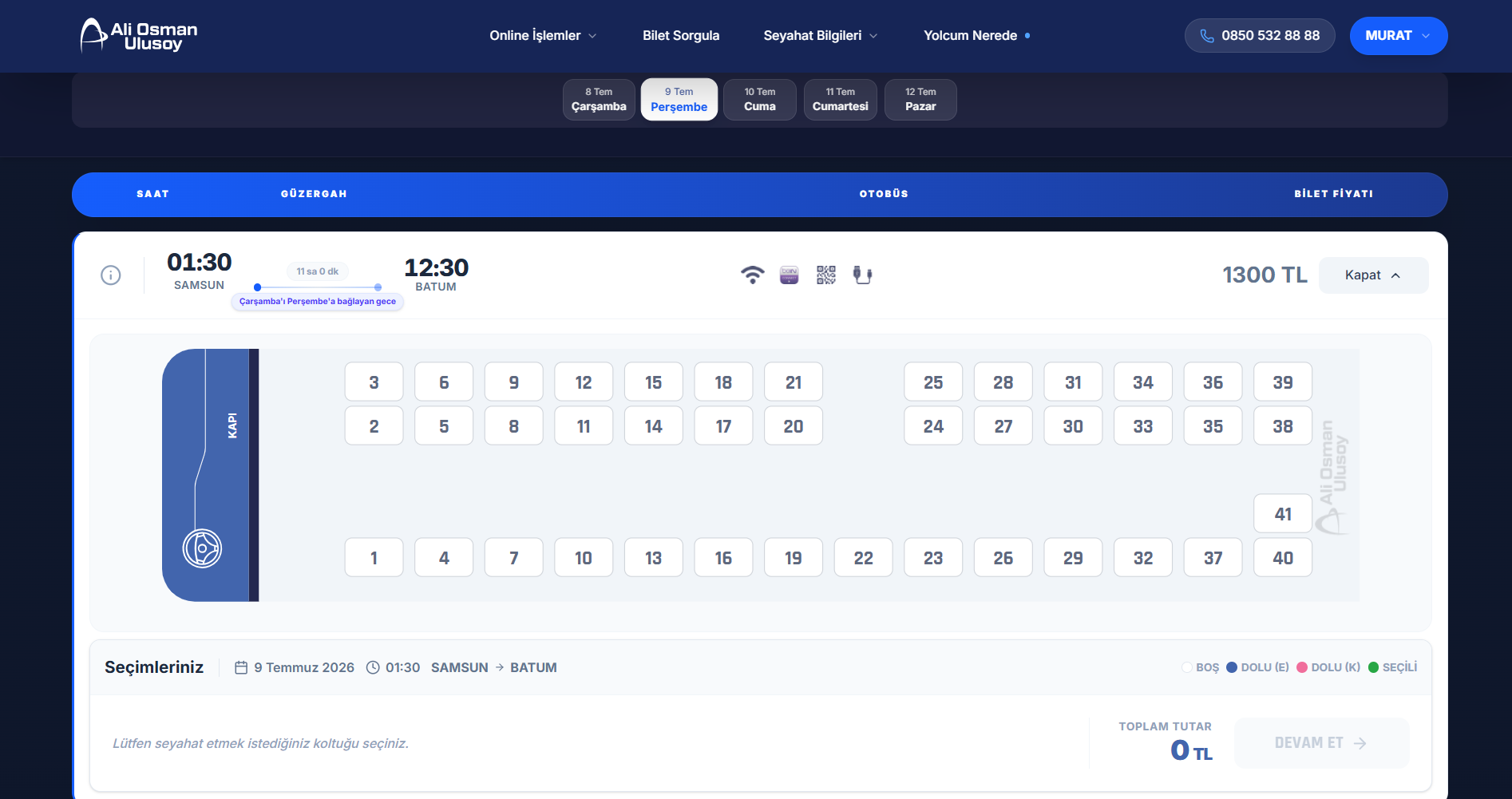
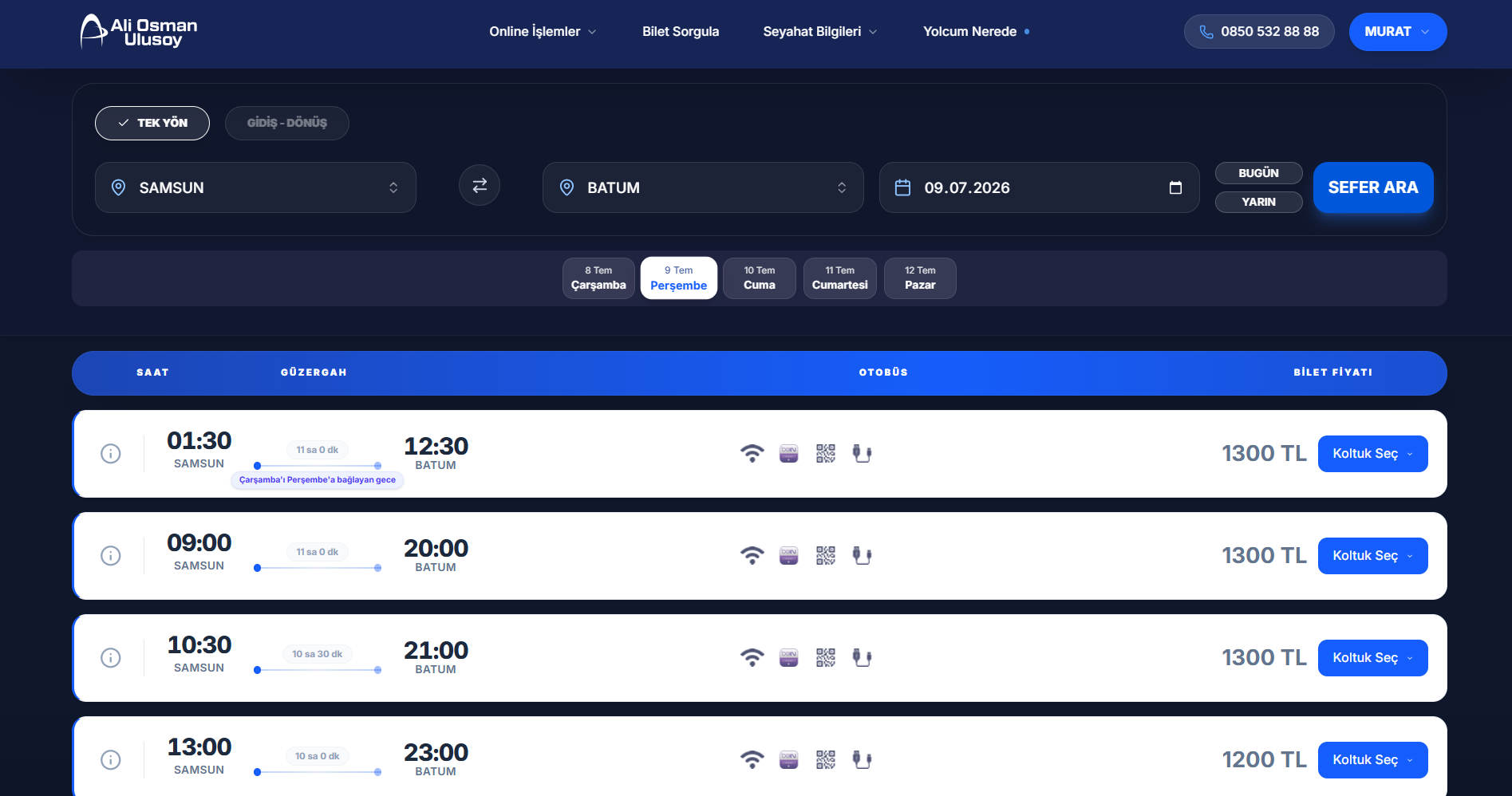
- Dynamic Interaction with CSR: The ticket search engine, dynamic pricing, seat selection, and cart operations are executed as Client-Side Rendering (CSR). This reduces server load and ensures smooth instant DOM updates.
- State and Caching: Server state management is handled with
React Queryfor data coming from the API (trips, available seats);Zustandis preferred for global states like user sessions and filters.
3. Admin Panel and Operational Modules
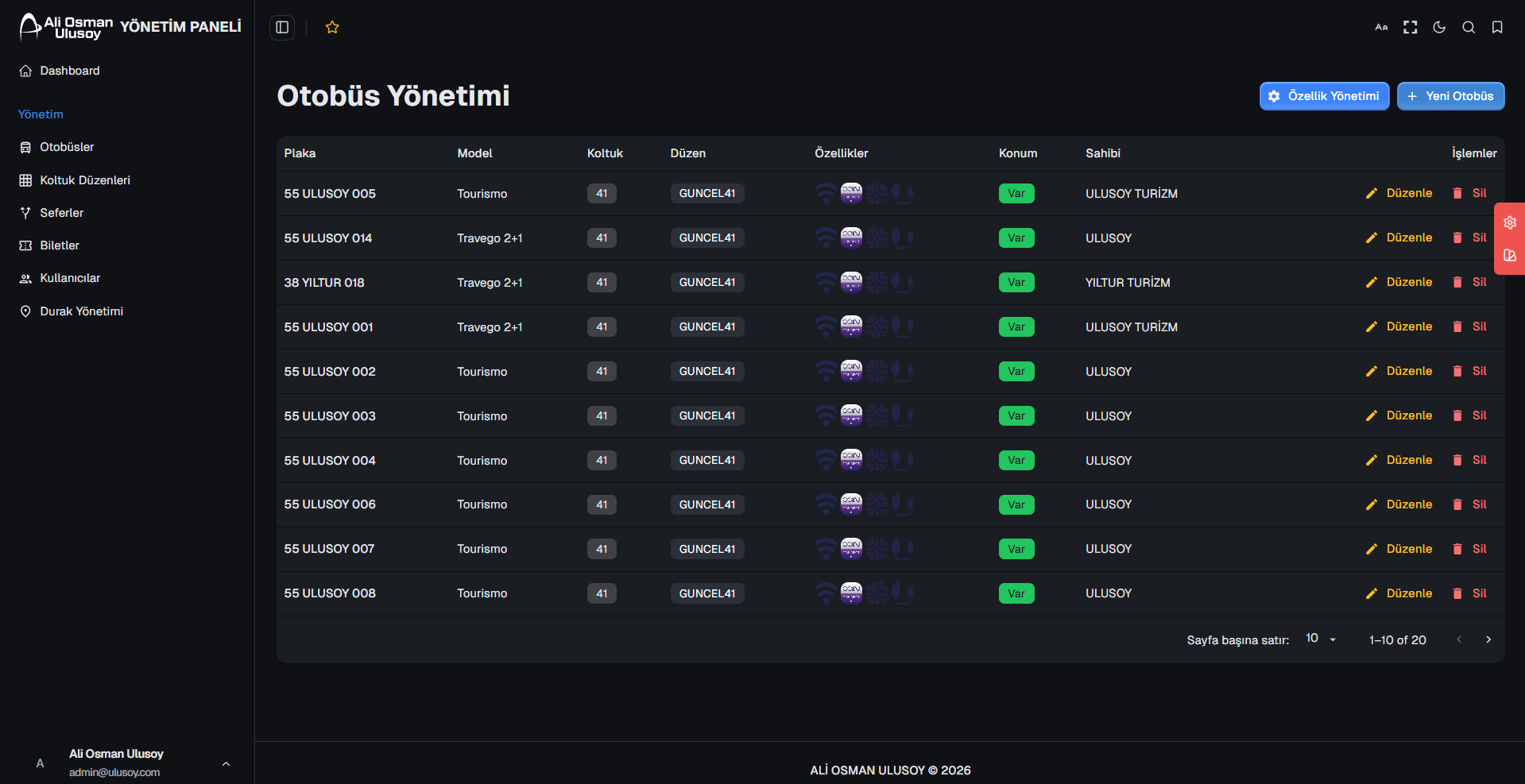
The admin panel is coded not just as a simple content management system, but with a focus on operational efficiency to manage all the lifeblood of a bus company.
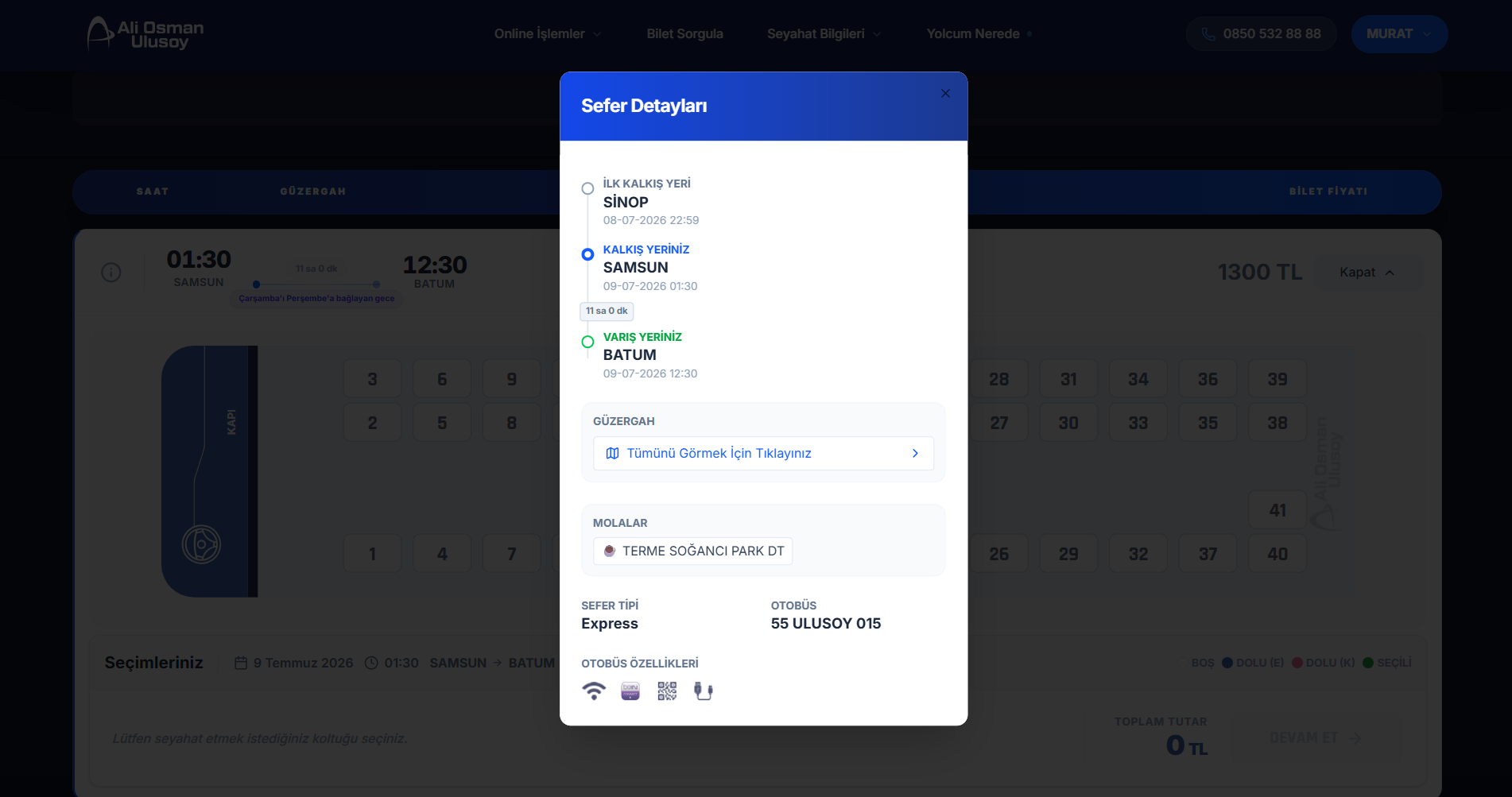
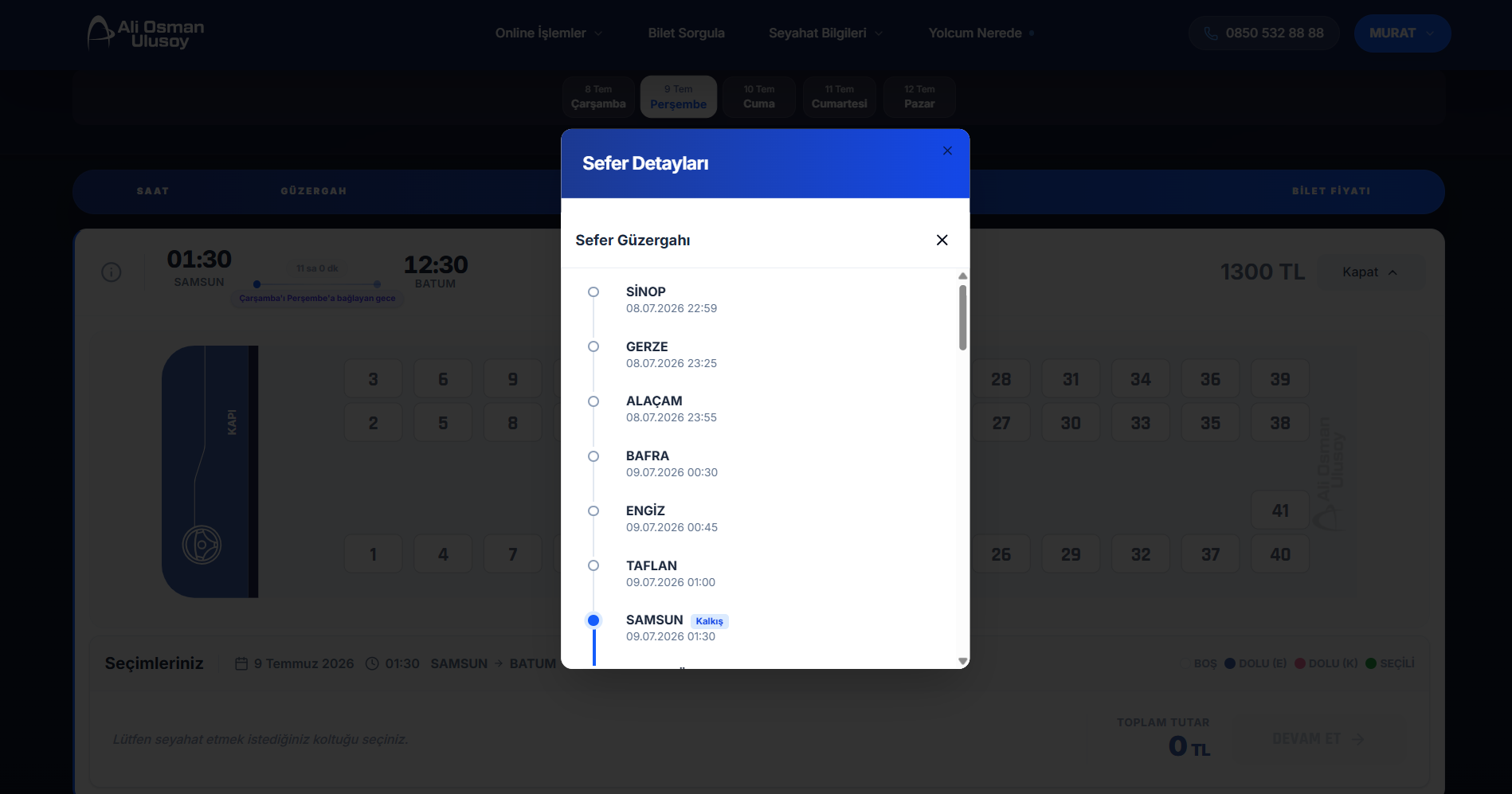
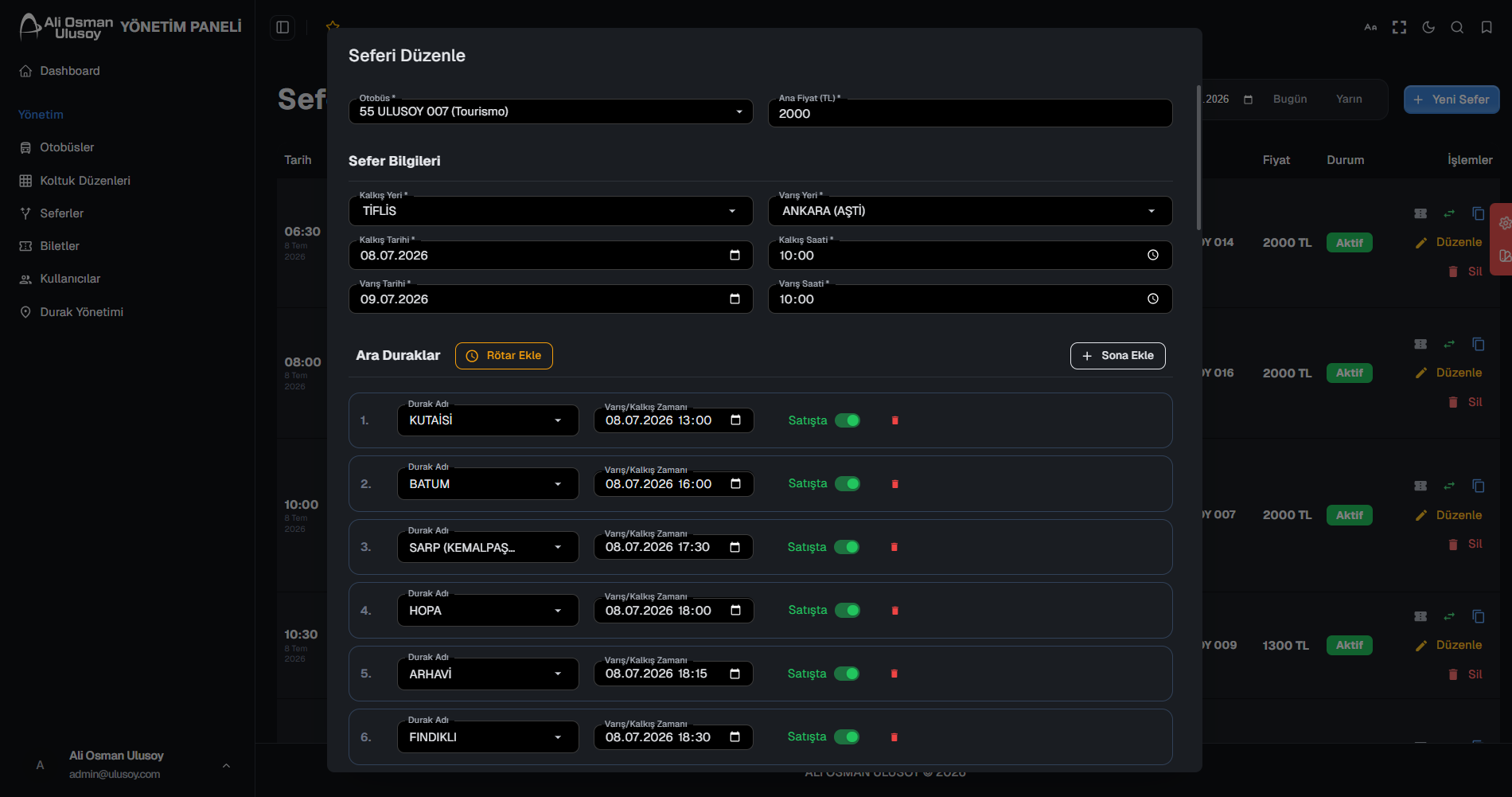
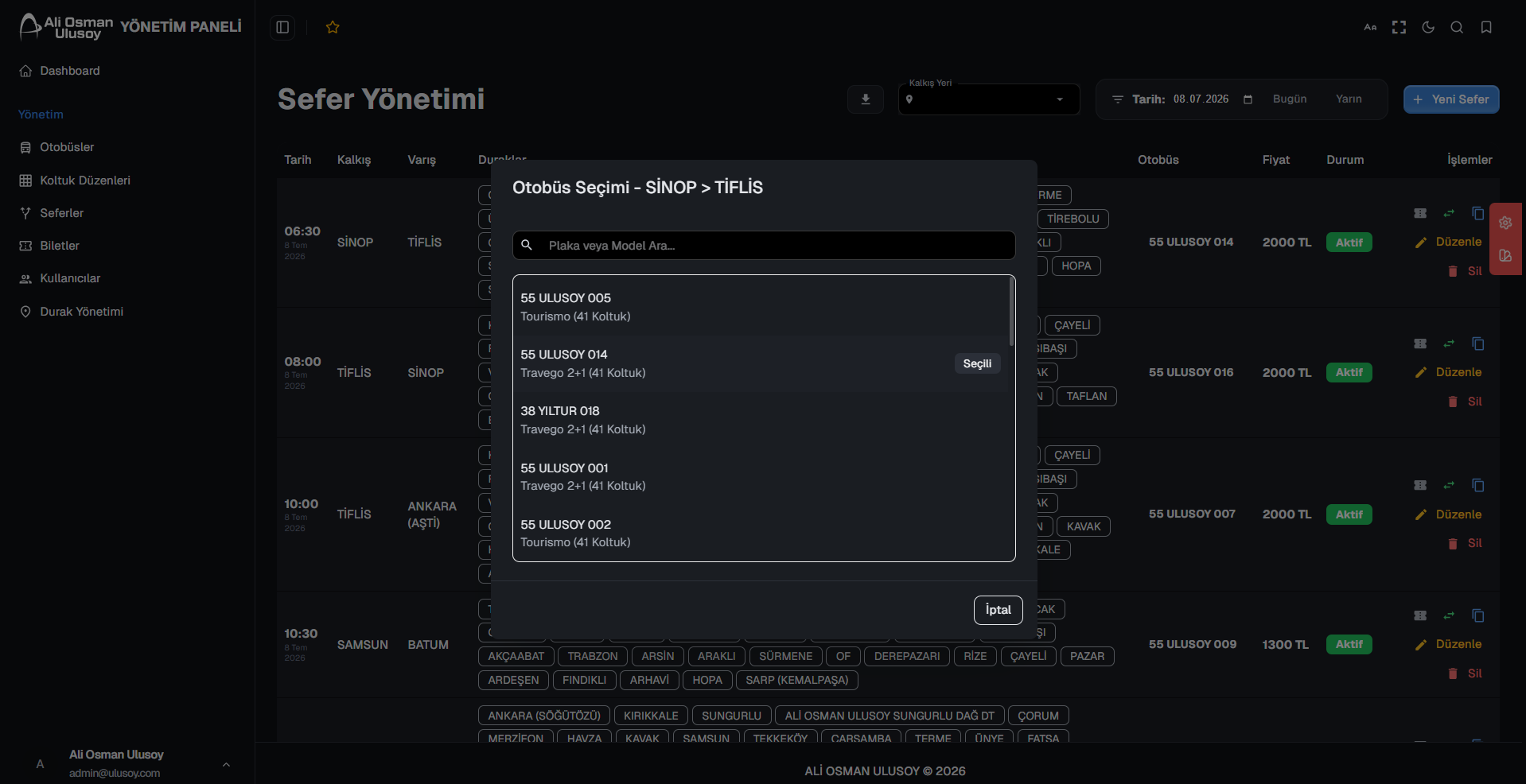
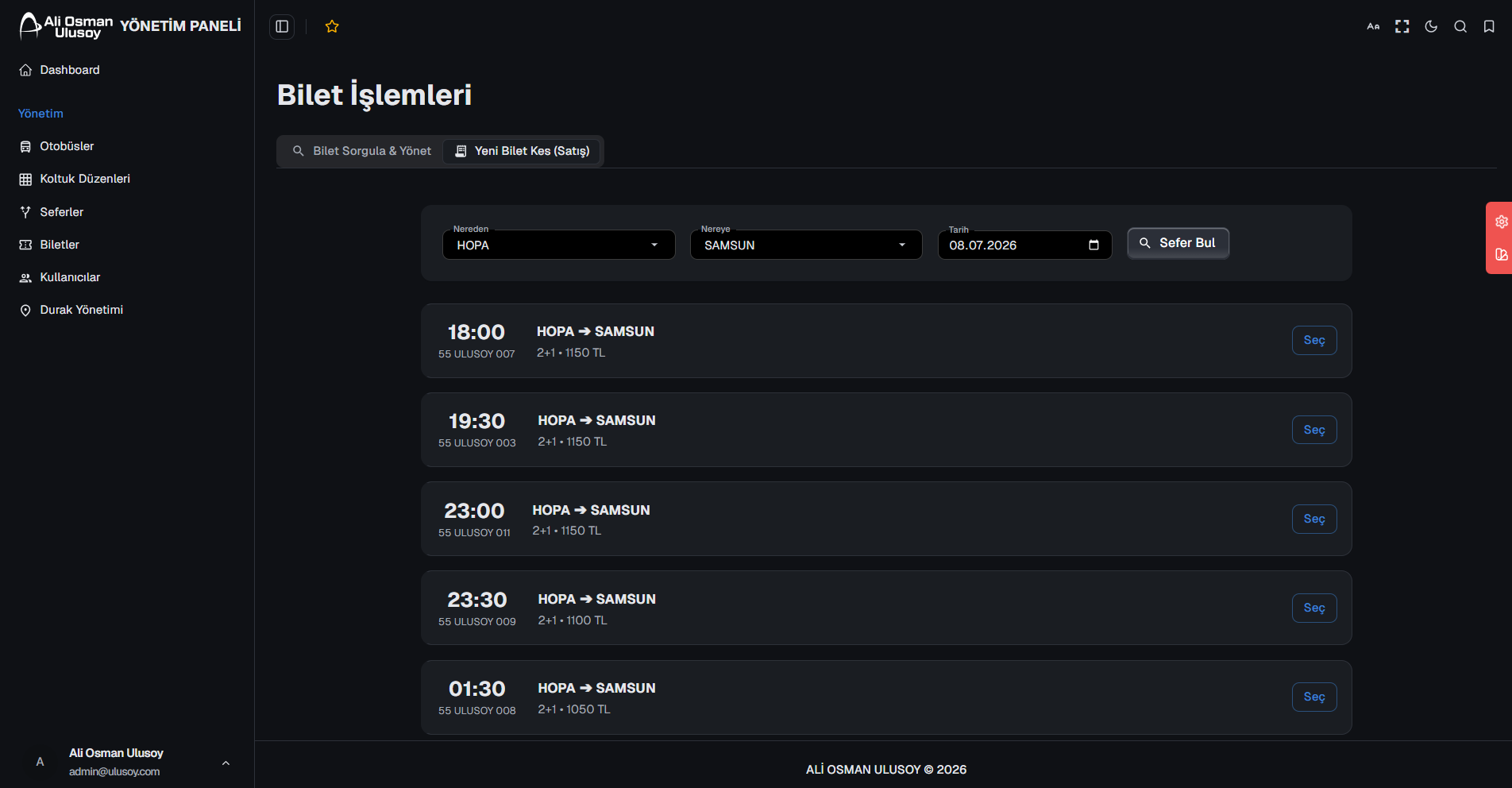
- Routes (Trip and Price Management): The most critical module where trips are created and intermediate pricing algorithms (Anchor Pricing matrix) between stops are calculated.
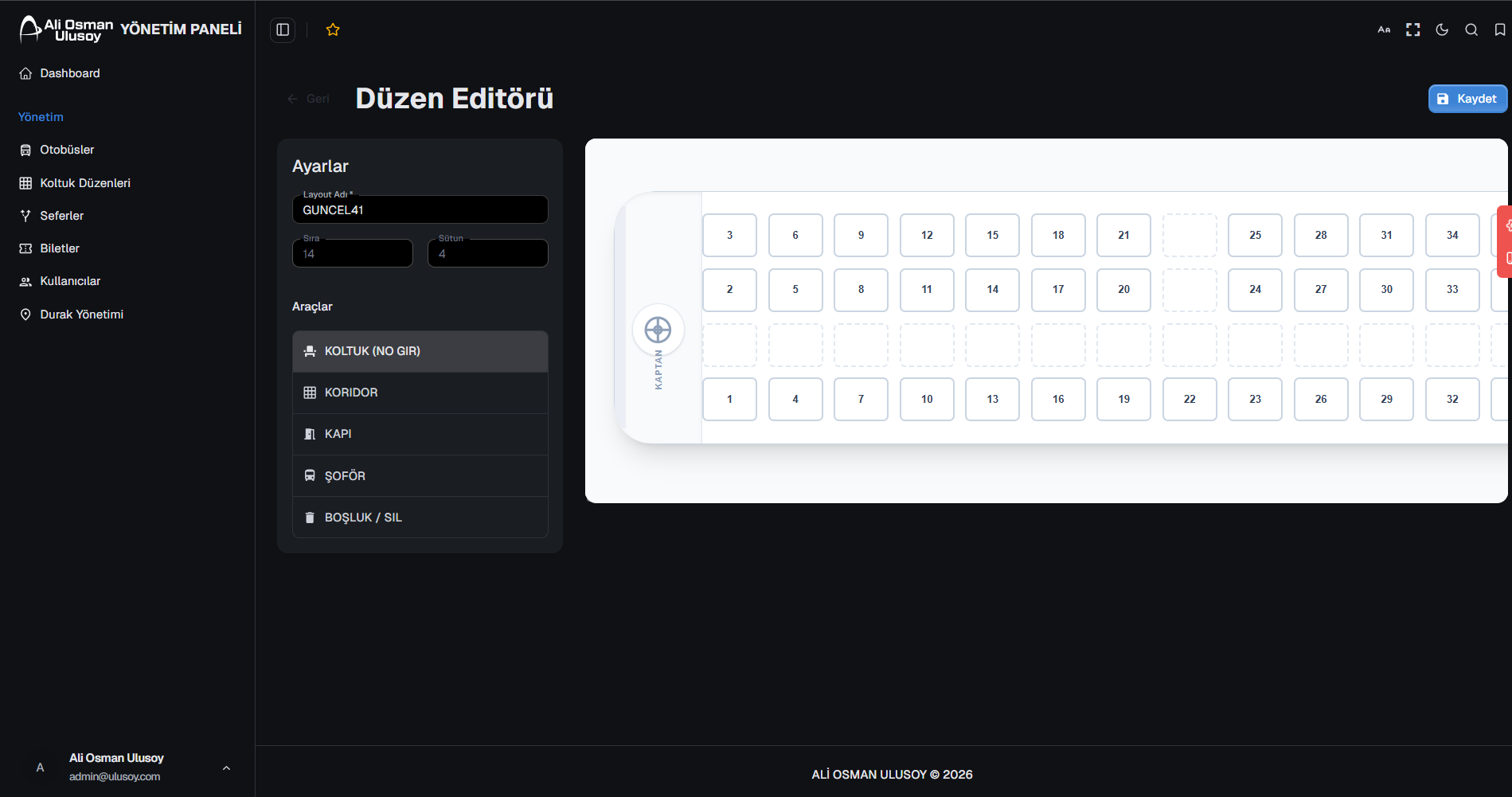
- Buses & Features (Fleet Management): Management of bus license plates, features (Wi-Fi, TV, 2+1 / 2+2), and seat layout templates.
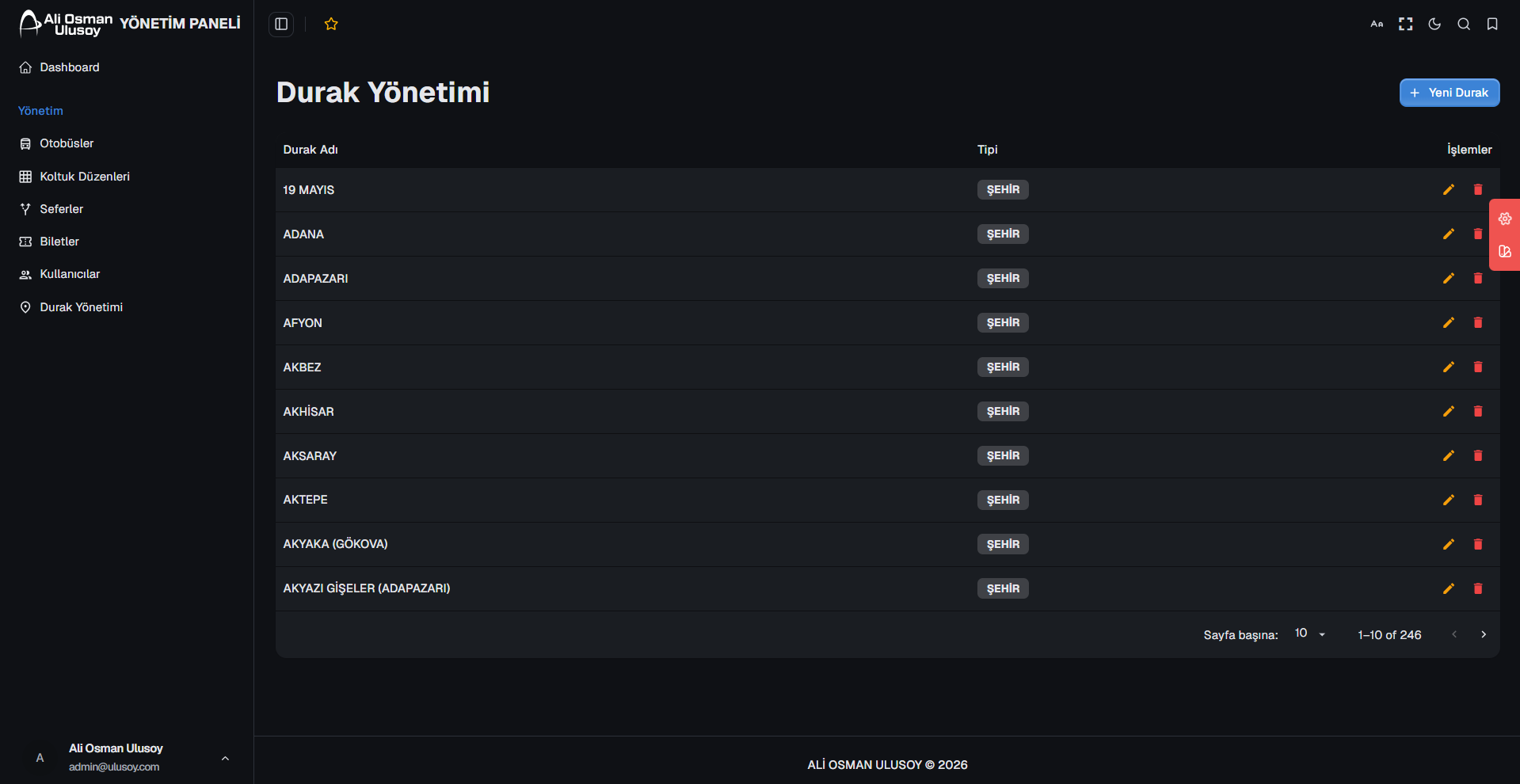
- Stations (Stop/Terminal Management): Registration of departure/arrival points across Turkey with their coordinates and terminal information.
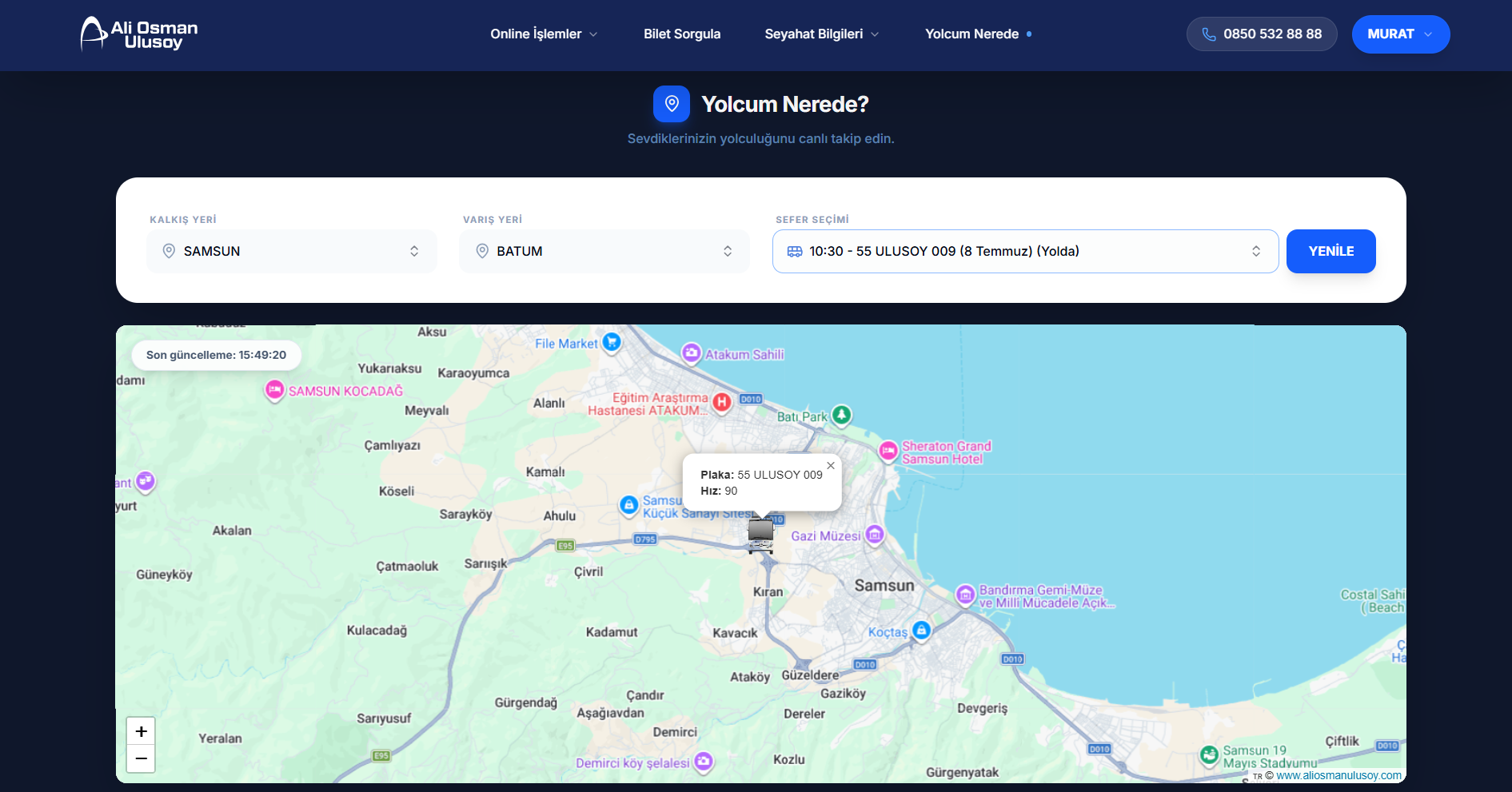
- Live Map (Live Fleet Tracking): An infrastructure module prepared to monitor vehicles on the map on an operational basis.
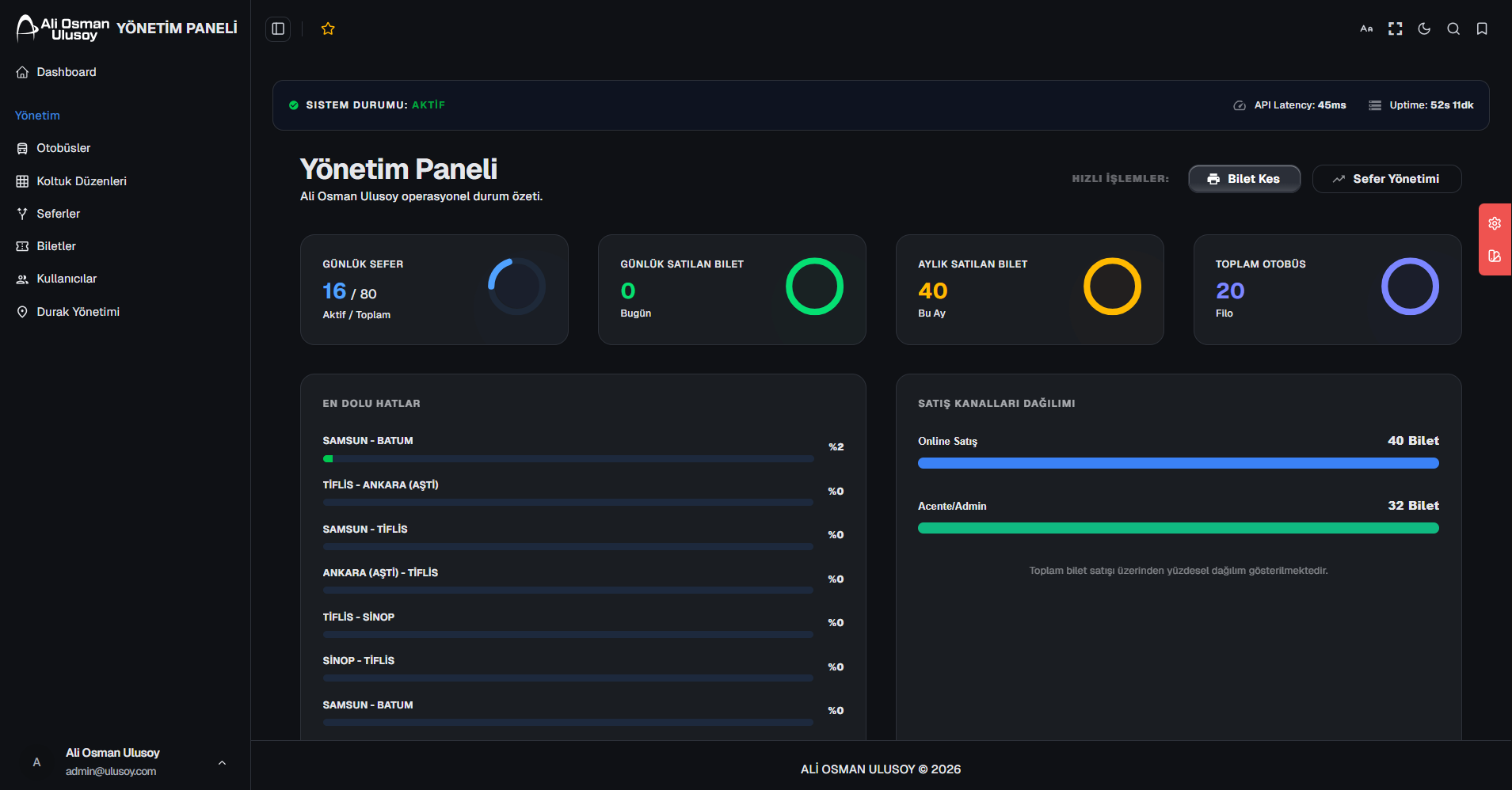
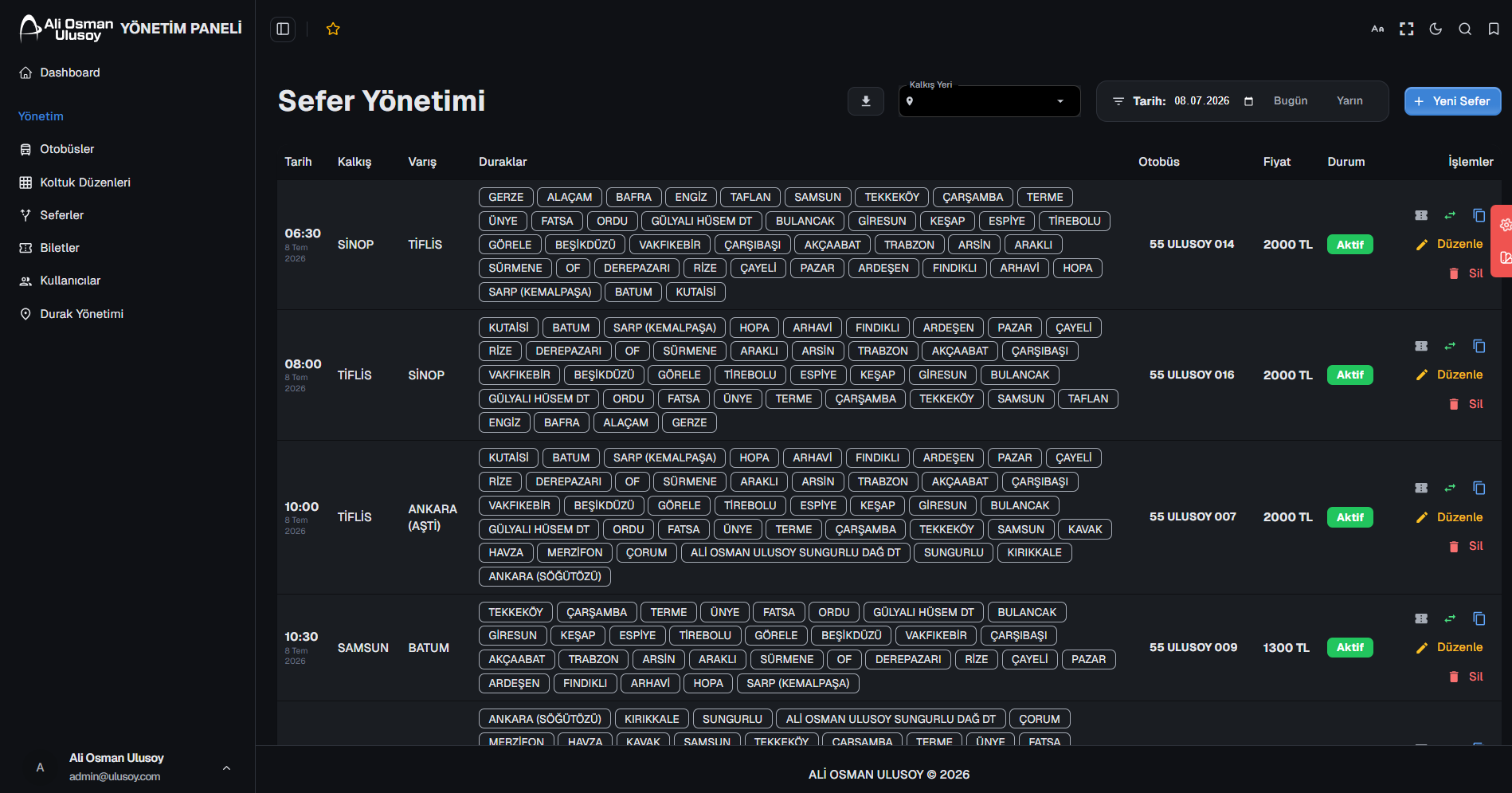
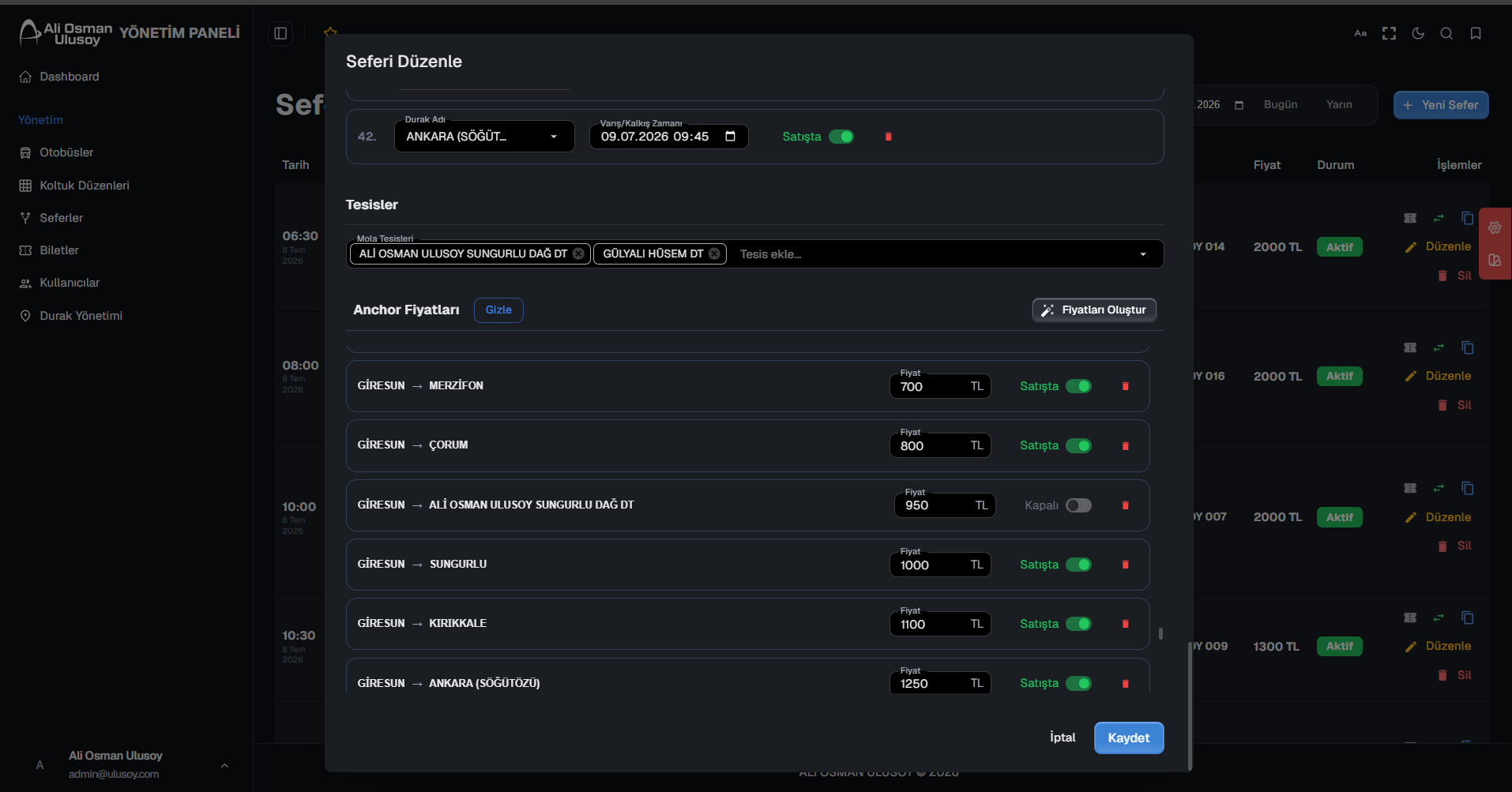
4. Data Flow and API Architecture
The data flow of the applications is designed with an independent service approach. The Frontend and Admin panels do not connect directly to the database; all data exchange is provided via Axios interceptors through the NestJS backend API using REST architecture.
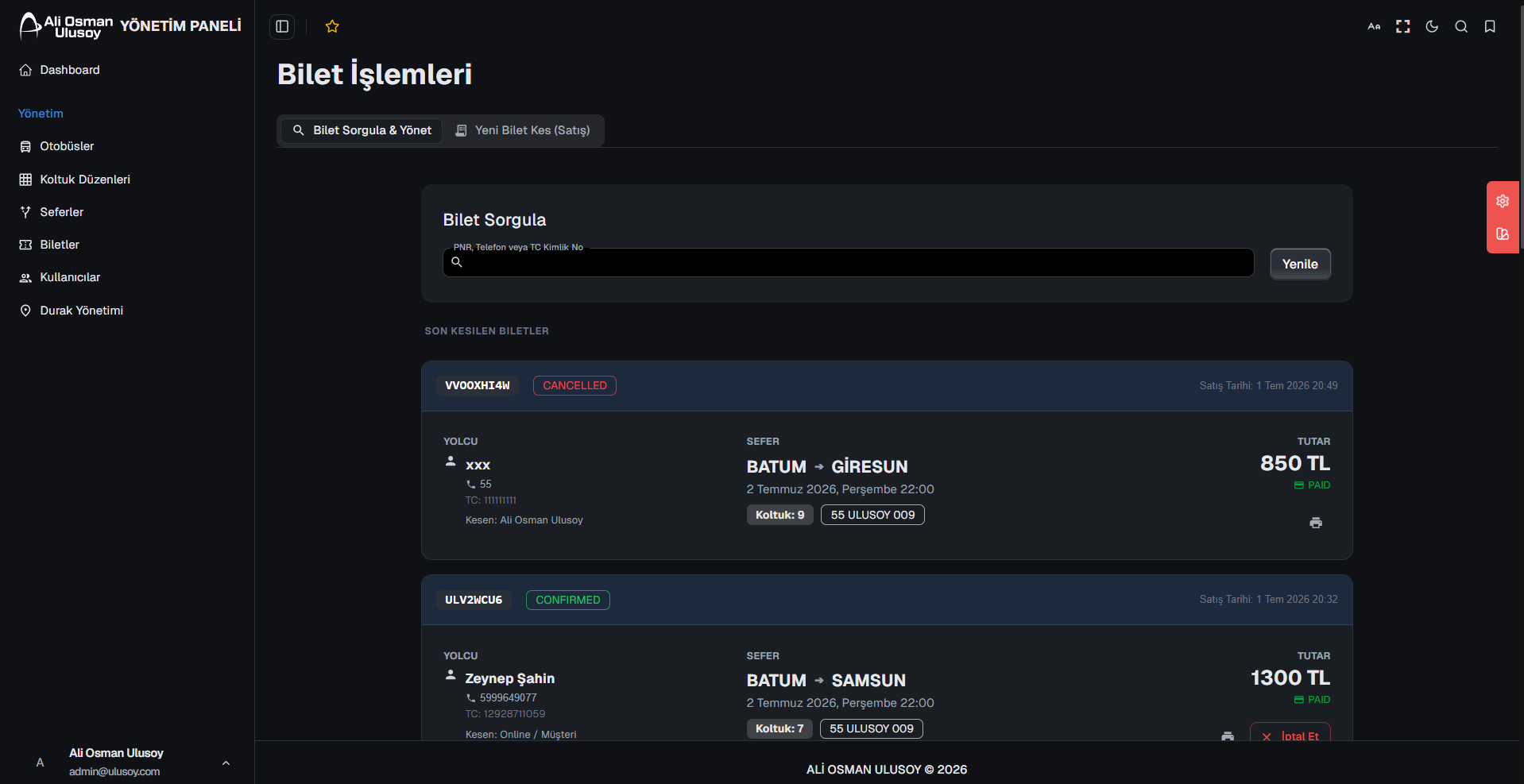
In cases requiring instant data like ticket sales, real-time seat occupancy rates are checked via the API to prevent race-condition (selling the same seat to two people) issues. Security is ensured with NextAuth / JWT token-based authentication mechanisms.
5. Infrastructure, Deployment and System
The architecture of the project was not left solely in the development environment; it was moved to the cloud environment with modern system administration (SysAdmin) principles.
All layers of the project (Frontend, Admin, and Backend) were deployed on a VDS located abroad (Bulgaria) in an Ubuntu 24.04 operating system environment using Coolify with a completely isolated Docker container architecture. In this way, the CI/CD processes, database management, and server resource optimization of the application are professionally managed from a single center.
During deployment, environment variables (.env) were injected onto the isolated VDS, and compilation processes were accelerated with Docker Cache optimizations.
Click For Demo
Legal Disclaimer: This project is an independent concept (rework) created solely for educational purposes, portfolio showcasing, and demonstrating software development skills. The project has no official affiliation, sponsorship, or commercial relationship with Ali Osman Ulusoy Turizm or its subsidiaries. Logos, brand names, and images used in the project remain the property of their respective owners. No actual ticket sales or commercial transactions take place through this system.